
Last Updated: September, 2026
Tariff compliance documentation requirements are the records importers must keep to prove every duty they paid was correct: classification decisions and the reasoning behind them, country-of-origin certificates traceable to the supplier, commercial invoices, customs declarations, and landed cost and valuation records. U.S. Customs and Border Protection requires importers to keep entry records for five years. Most manufacturers and distributors pay their tariffs correctly, yet few can produce that full package, tied to each transaction, when an auditor asks on short notice. That gap is where penalties start.
Here’s what that gap looks like in practice.
A client called me on a Tuesday afternoon, and I could hear the stress before she even explained the situation. A customs auditor had requested documentation for every tariff-related shipment from the past three years. She had 30 days to compile it.
Her records were scattered across email threads, spreadsheets, and her ERP system. Some documents lived with the freight broker. Others were buried in an accounts payable folder nobody had organized in two years. She had been paying her tariffs correctly; she wasn’t trying to get away with anything. She just had not treated tariff compliance documentation requirements as an ongoing discipline, and now she was paying for that in the worst way possible: on a deadline and under scrutiny.
Her situation is not unusual. And it is worth walking through how it plays out, because the gap between “we pay our tariffs” and “we can prove it in 30 days” is wider than most manufacturers and distributors realize until it is too late.
The Documentation Nobody Thinks About Until It’s Too Late
Here’s a company scenario we see fairly often. A Midwest distributor of industrial components sources from three countries, runs a couple hundred active SKUs, and has a lean operations team that is good at what they do. Tariff compliance, as they understand it, means paying the right rate at the right time. Their ERP captures the transactions, and their freight broker handles customs filings. So, they figure that covers it pretty well.
Then a new round of tariffs hits goods from one of their primary overseas suppliers. The rates change on specific product classifications and suddenly they realize they need to go back through recent purchase history, verify that every affected SKU was classified correctly under the new schedule, and document the basis for each classification decision.
That is when the gaps show up. The ERP has the transaction but it does not have the classification reasoning. The freight broker has the customs filing and the supplier has the country-of-origin certificate. However, nobody has all three in one place, tied to the same transaction, in a format a customs auditor would find satisfying.
Tariff classification is not just about paying the correct duty rate today. It is about creating a defensible record that proves you paid the correct rate if anyone asks three years from now. The documentation burden does not end when the shipment clears customs. In many ways, that is when it starts.
What Customs Actually Wants to See
When a customs review begins, here is the specific documentation businesses are asked to produce: complete audit trails for every classification decision, country-of-origin documentation traceable to the supplier level, landed cost and valuation records, and supporting evidence showing that classifications were not arbitrary.
Customs auditors typically ask for five categories of documentation. The table below shows what each one proves, where it tends to end up in a manual process, and how Acumatica keeps it audit-ready.
Customs auditors typically ask for five categories of documentation. The table below shows what each one proves, where it tends to end up in a manual process, and how Acumatica keeps it audit-ready.
| Document | What it proves | Manual process | With Acumatica |
|---|---|---|---|
| Classification records | Why a tariff code was chosen, by whom, on what basis | Reasoning rarely captured anywhere | Logged with evidence when the decision is made |
| Country-of-origin certificates | Where goods were made, traced to the supplier | Separate folders; may be expired | Tied to the purchase order, with lot/serial tracing |
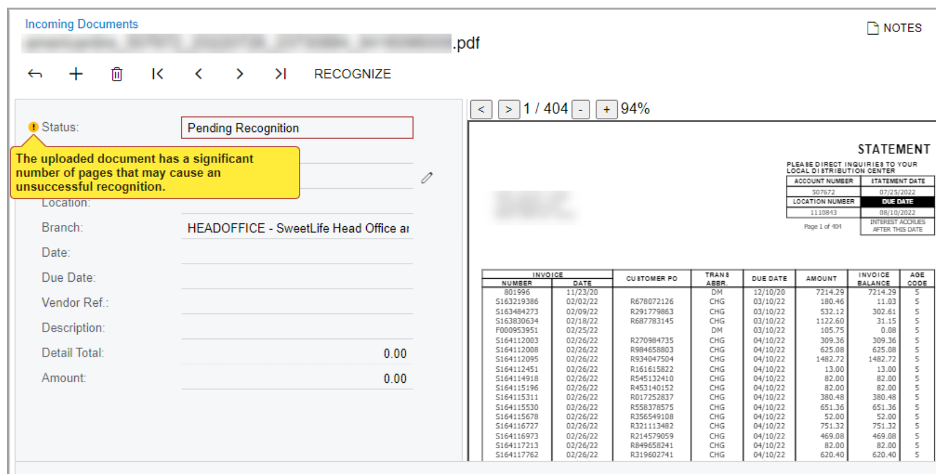
| Commercial invoices | Transaction value matching the declaration | Email threads and AP folders | Captured by AI document recognition |
| Customs declarations | What was declared at entry | Held by the freight broker | Matches invoices; same source data |
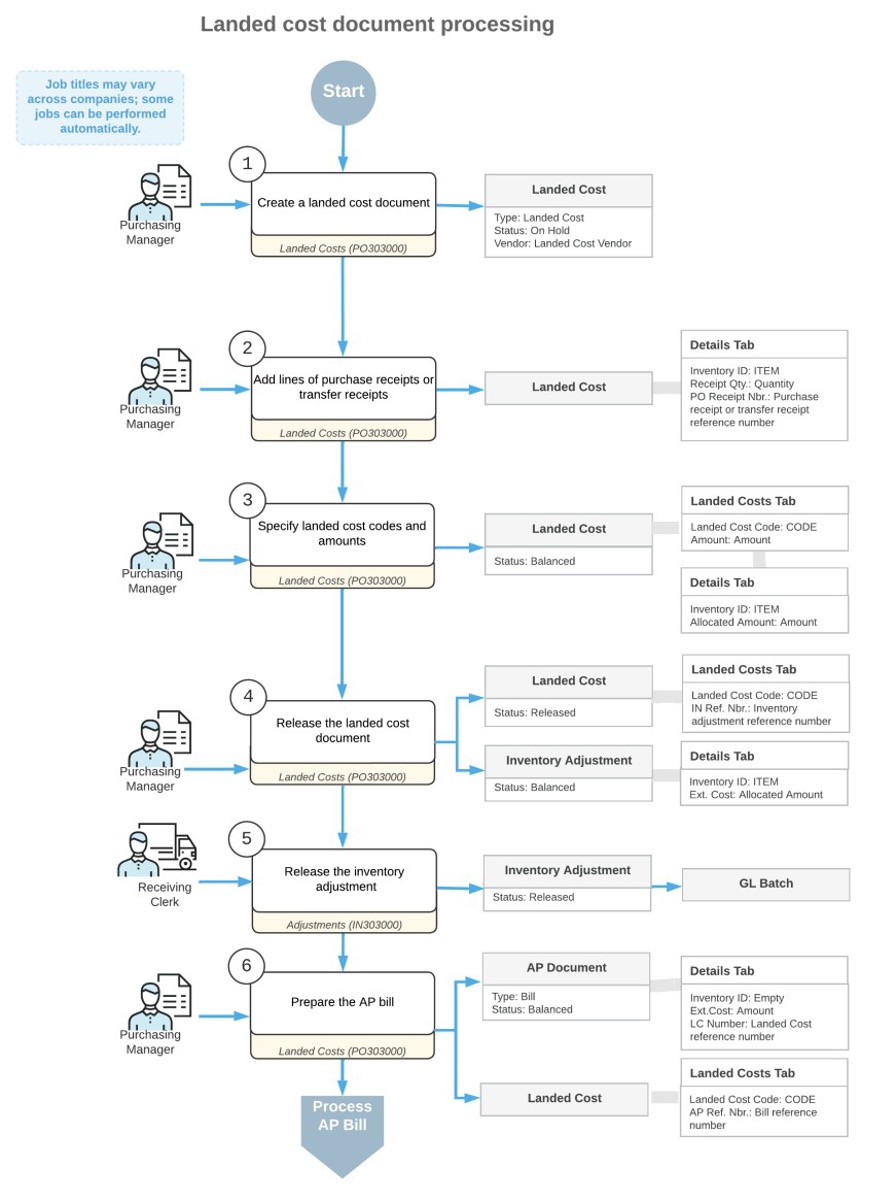
| Landed cost and valuation | Duty calculated on the correct value | Spreadsheets, rarely reconciled | Tracked in real time; rate changes flagged |
That last piece matters more than people expect. Auditors do not just want to see what you classified a product as; they want to see why. What was the basis? Who made the determination? What documentation supported this at the time of the transaction?
Your ERP has transaction records but it does not automatically generate compliant documentation. Those are two different things, and most legacy systems only do the first.
So, the operations manager spends the better part of two weeks pulling records from four different systems, cross-referencing invoice dates against customs filings, chasing down supplier certificates that in two cases had expired before the shipments they supposedly covered. One inconsistency between a commercial invoice and a customs declaration is enough to trigger a deeper look.
The Manual Documentation Gap
Here’s the part that catches companies off guard, because the manual documentation gap feels manageable until you have to close it under time pressure.
Day-to-day, assembling tariff documentation manually is going okay. The shipments clear, the invoices get paid, and the filings go out. But what you don’t see coming are three years of records that are technically complete but not audit-ready. They are stored in different places, created by different people, and never reconciled against each other.
For companies managing hundreds of SKUs with variable tariff classifications, shifting duty rates, and multi-country sourcing, maintaining audit-ready documentation manually is not just difficult. It is realistically not possible without the right systems. The complexity compounds faster than any team can keep up with.
Our example distributor ends up submitting their documentation package with four discrepancies they could not fully resolve. They disclose them proactively. The auditor appreciates transparency, but it still costs them.
Penalties That Dwarf the Original Tariff
The final bill for a company in this situation includes, misclassification penalties, late filing fees, interest on any underpayments identified during the audit, and if the review expands to cover additional shipment categories, you are not just dealing with the original issue anymore.
The financial exposure from a documentation gap is not proportional to the original classification error. A modest misclassification on one product line can trigger a systemic review of all similar products going back years. The original tariff amount becomes almost irrelevant. The cost of responding to the audit, the penalties, and the operational disruption is what actually hits the business.
Our distributor’s total cost from that review, including outside counsel to help them respond, was nearly four times the tariff amount that triggered the discrepancy in the first place. Compliance is not optional, and the cost of getting documentation wrong has no relationship to how small the original mistake was.
What This Looks Like with Automated Compliance Tools
Now, let’s run the same scenario differently. Same distributor, the same tariff changes, and the same potential audit exposure. But this time they are running on Acumatica with AI-driven document management in place.
When the tariff change hits, Acumatica’s AI-powered document recognition has already been processing invoices, customs documents, and trade certificates at the transaction level as shipments came in. Country-of-origin documentation is tied to the specific purchase order, not sitting in a separate folder. Classification decisions are logged with supporting evidence at the time they are made, not reconstructed afterward.
When the tariff rate changes, the system flags affected SKUs automatically. The anomaly detection that has been monitoring purchase costs and landed costs in real time surfaces the impacted products before the next purchase order goes out, not after.
And if (or when) that customs audit request comes in, the documentation package is not a 30-day scramble; it’s just a report you need to run. The audit trail was being built continuously, in the background, as the business operated. The commercial invoices, customs declarations, and internal records are consistent because they were generated from the same data.
For lot and serial tracking on specific product lines, complete country-of-origin traceability is already there in a structured, retrievable format. The story is already told, and you don’t have to reconstruct it under deadline pressure.
Building Your Defense Before You Need It
The best time to prepare for a customs audit is well before you are notified that one is coming. However, we get it – sure, it’s easy to agree with the thought you need a better system but you don’t have the time. We can help.
The companies we work with who have made the shift to automated compliance documentation describe the change the same way: it is not that audits became easier to pass. It is that audits stopped being something they worried about. The documentation requirement is met continuously, automatically, as a byproduct of normal operations. There is nothing to scramble for.
Getting there does not require a complete system overhaul. We do a phased approach that starts with your highest-exposure product lines and sourcing companies, giving you the biggest risk reduction first, and then builds from there.
What would it take for your team to pull together three years of compliant tariff documentation today? If that question is uncomfortable to sit with, let’s talk about where your gaps might be. Reach us at 440-498-9920 or email us at: sales@parallelsolutions4u.com.
Tariff Compliance Documentation: Frequently Asked Questions
How long do we need to keep tariff and customs documentation? As a general rule, U.S. Customs and Border Protection requires importers to retain entry-related records for five years from the date of entry under 19 CFR Part 163. That includes commercial invoices, country-of-origin certificates, classification worksheets, and landed cost detail, not just the customs filing itself.
What usually triggers a customs compliance audit? Inconsistencies between a commercial invoice and a customs declaration, a new or changed tariff rate on a product classification, or a pattern of duty underpayments are the most common triggers. Audits can also happen on a random selection basis, which is why documentation needs to be ready before a notice ever arrives.
Can Acumatica generate tariff compliance documentation automatically? Yes. With AI-driven document management in place, Acumatica ties country-of-origin certificates, classification decisions, and landed cost records to the purchase order and transaction they belong to as the business operates. The audit trail builds continuously instead of being reconstructed after the fact.
Where should we start if our tariff documentation isn’t audit-ready today? Start with your highest-exposure product lines and sourcing countries. Getting continuous, transaction-level documentation in place for the SKUs carrying the most tariff risk reduces the most exposure first, and the approach can expand to the rest of the catalog from there.
Read next: for a closer look at how landed cost and duty data flow through Acumatica, see our overview of Acumatica Cloud ERP for distribution and manufacturing.
Parallel Solutions is an Acumatica Cloud ERP implementation partner serving manufacturers and distributors across Greater Cleveland and nationwide. Our team helps companies move tariff and customs documentation out of spreadsheets and email threads and into a system that builds the audit trail automatically.