

Last Updated: June 2026 | By Mary Jo O’Neill, Principal & CFO, Parallel Solutions
A plant manager called me a few months ago, and I could tell from the first sentence that he had been at his desk for a long time. It was after 9 PM. He was trying to calculate the tariff impact on roughly 3,000 SKUs following a new round of policy changes that had dropped that afternoon. His ERP had all the transaction data. It had purchase history, vendor records, cost layers. Everything he needed was technically in the system.
But the system could not tell him what any of it meant right now. It could show him what things cost yesterday. It could not tell him what they would cost tomorrow, which classifications were affected, or which suppliers were suddenly the wrong choice. He was doing that math himself, in a spreadsheet, at 9 PM.
That is the core of legacy ERP trade management challenges, and it is playing out in manufacturing and distribution operations across the country right now. The system is not broken. It just was not built for this.
Key Takeaways
- Legacy ERP systems were designed to record historical transactions, not respond to real-time trade policy changes.
- When tariff schedules change, manual redistribution workflows in legacy environments can take days or weeks, creating a response gap that compounds with every new policy change.
- Acumatica Cloud ERP addresses legacy ERP trade management challenges through AI-powered anomaly detection (introduced in 2024 R2), automated document recognition, and the Acumatica AI Studio no-code workflow builder.
- Landed cost calculations in Acumatica update automatically when tariff rates change, eliminating the manual lookup-and-update cycle.
- Compliance documentation gaps in legacy systems are invisible until an audit makes them visible, often years after the fact.
When Stability Was Enough
Legacy ERP systems were engineered for a world where trade policy moved at the pace of legislation. Tariff schedules changed infrequently. Country-of-origin rules were stable. Landed cost calculations were something you set up once, reviewed annually, and largely left alone. In that environment, historical reporting was genuinely useful because history was a reliable guide to the near future.
That world is gone. Policy changes now happen overnight, sometimes over a weekend. A classification that was accurate on Friday may be wrong by Monday. What made legacy systems reliable in stable conditions makes them genuinely inadequate in volatile ones. They were designed to record what happened. They were never designed to help you respond to what is happening right now.
The problem is not that the people running these systems are doing anything wrong. The problem is structural. You cannot configure your way out of a fundamental architecture limitation.
The Speed Problem
Manual processes have a throughput ceiling, and in today’s trade environment, policy velocity has blown past it. When a new tariff schedule drops, the workflow in a legacy environment looks something like this: someone identifies the change, someone else pulls the affected SKUs, a third person recalculates landed costs, a fourth updates pricing, and somewhere in that chain someone is checking whether the original classification was even correct. That process takes days. Sometimes weeks.
By the time that analysis is complete, the next change has already landed. Legacy ERP trade management challenges compound because the response cycle never catches up. You are always analyzing yesterday’s problem while today’s problem grows and tomorrow’s arrives.
For distributors managing hundreds of active vendor relationships across multiple countries, this is not a minor inefficiency. It is a structural disadvantage that shows up directly in margin compression and missed purchasing decisions.
How Tariff Volatility Breaks Landed Cost Calculations in Legacy ERP
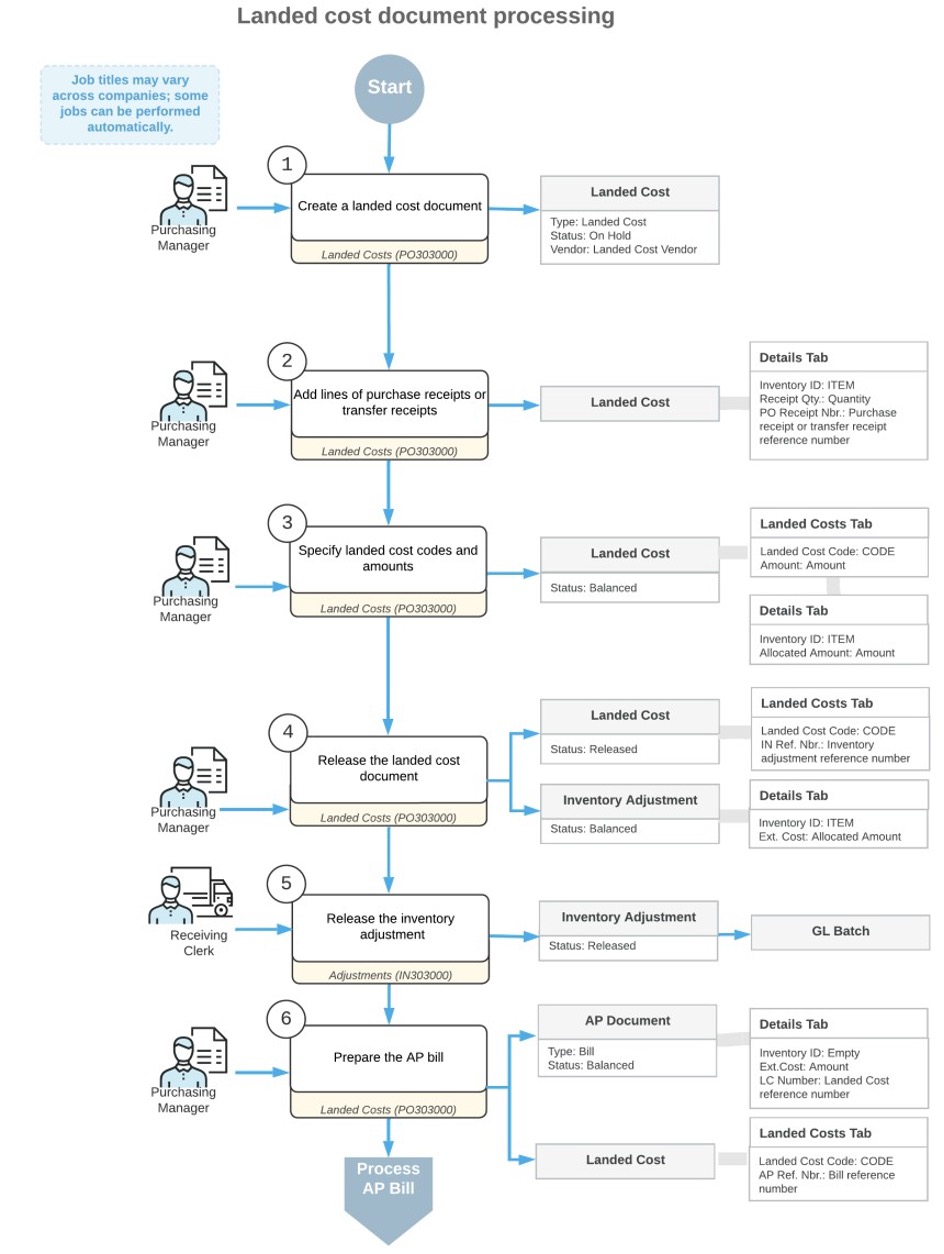
Landed costs used to be a relatively contained calculation. Freight plus duty plus insurance, allocated across the receipt. You could build that into a spreadsheet and it would hold up for most of a year.
Now landed costs are moving targets. The duty rate depends on country of origin, which depends on where the component was actually manufactured, not just where the vendor is headquartered. The classification depends on how the item is categorized under the current schedule, which may have changed since the last time anyone looked at it. The shipping route affects costs in ways that interact with tariff rules in non-obvious ways.
A legacy ERP was not designed to monitor any of those variables dynamically. It was designed to record what you told it. If you told it the wrong duty rate because the schedule changed last week and nobody updated the system yet, it will record the wrong duty rate with complete confidence. The system does not know what it does not know.
For manufacturers who need accurate material costs to make production decisions, that gap is not theoretical. It produces real errors in job costing, pricing, and purchasing that accumulate quietly until they show up in a margin review that nobody can explain.
The Compliance Time Bomb
We wrote recently about Understanding the Tariff Challenge and what happens when a customs auditor comes looking for three years of records. Companies that manage trade compliance manually almost always have documentation gaps they did not know existed until someone requested the records.
Legacy systems store transactions. They do not automatically generate the audit trails, classification justifications, and country-of-origin documentation chains that compliance actually requires. Every manual step in the documentation process is a step where something can be missing, inconsistent, or simply wrong.
The compliance risk from legacy ERP trade management challenges is not evenly distributed across time. It accumulates silently in the background, and it becomes visible at the worst possible moment: when an auditor requests documentation you do not have, or a misclassification penalty arrives for decisions made two years ago by someone who has since left the company.
What AI-Powered Systems Do Differently
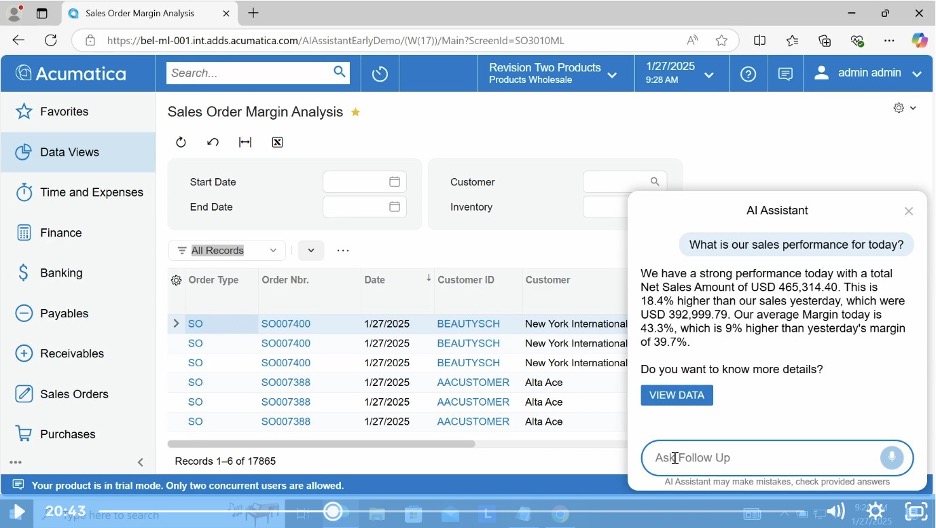
The fundamental difference between a legacy ERP and a modern AI-powered system is not a longer feature list. It is a different relationship with time. Legacy systems tell you what happened. AI-powered systems help you understand what is happening and anticipate what is coming.
Acumatica Cloud ERP’s AI capabilities are built around this distinction in a few specific ways that matter directly for trade management.
Anomaly Detection, introduced in Acumatica’s 2024 R2 release and expanded in 2025 R1, continuously monitors your purchase costs and landed cost calculations. Instead of waiting for a month-end variance review to surface a problem, the system flags unusual patterns in real time. If a vendor’s invoice is materially higher than expected based on historical patterns, or if a cost deviation suggests a classification may be wrong, the alert comes while you still have time to act on it.
AI-powered document recognition changes how trade documents flow through accounts payable entirely. Invoices, customs certificates, and trade documents are processed automatically, with fields populated and matched to the correct purchase orders without manual entry. The system learns your vendors and improves accuracy over time. What used to require hours of manual processing happens in the background as a normal part of operations, which means the audit trail is being built continuously rather than assembled after the fact.
Acumatica AI Studio directly addresses one of the core legacy ERP trade management challenges: the gap between when a trade policy changes and when your system responds to it. Without writing code, your operations team can build workflows that trigger specific actions when tariff conditions change, route compliance documentation automatically, or flag purchase orders hitting affected classifications before they are approved. The people who understand your trade exposure configure the response directly, without routing the request through IT.
For landed cost management specifically, Acumatica automates the allocation of tariffs, duties, and transportation costs across purchase receipts in real time, using multiple allocation methods and integrating directly with inventory valuation. When a tariff rate changes, the system updates cost calculations automatically rather than waiting for someone to go find the number and change it by hand.
The Cost of Standing Still
The business case for moving off a legacy system is sometimes framed as a cost question: what does the new system cost, and what does the implementation take? But the more accurate frame is a competitive one. While your team is running manual calculations at 9 PM, a competitor running an AI-powered system is getting automated alerts, dynamic cost updates, and compliance documentation that builds itself. They are making purchasing decisions with current information. You are making them with information that was accurate as of the last time someone updated a spreadsheet.
That gap compounds. Every tariff change that your competitor processes in hours while you process in days is another margin advantage, another better sourcing decision, another compliance record that actually holds up. The legacy ERP trade management challenges your operation is managing today are not static. In a volatile trade environment, they get harder every quarter.
The plant manager who called me at 9 PM moved to Acumatica six months later. He told me the thing he noticed most was not any single feature. It was that he stopped working nights on tariff analysis. The system was doing it while he was doing other things.
For most manufacturers we talk to, that shift represents real cost avoidance: fewer manual hours on tariff analysis, reduced misclassification risk, and purchasing decisions made on current data rather than last week’s spreadsheet. What that adds up to depends on your volume and trade exposure, and it is worth calculating. Contact Parallel Solutions to work through what it looks like for your operation.
Read Next: Acumatica Distribution Edition: Built for the Complexity of Modern Supply Chains
Frequently Asked Questions: Legacy ERP Trade Management Challenges
What are legacy ERP trade management challenges?
Legacy ERP trade management challenges refer to the limitations that older ERP systems create when trade policy changes faster than manual processes can respond. These systems were built to record historical transactions accurately, but they were not designed to monitor real-time tariff changes, update landed cost calculations dynamically, or build compliance audit trails automatically. In a volatile trade environment, those limitations translate into margin compression, misclassification risk, and documentation gaps.
Why can’t legacy ERP handle modern tariff complexity?
Legacy ERP systems record the data you enter. They do not monitor external trade policy changes or flag when a previously correct classification becomes wrong. When a tariff schedule changes, someone on your team has toidentify the change, pull the affected SKUs, recalculate landed costs, and update the system manually. That process can take days, and in a fast-moving trade environment, the next change may arrive before the last one has been fully processed.
How does Acumatica address landed cost calculation errors caused by tariff changes?
Acumatica automates landed cost allocation across purchase receipts in real time, using multiple allocation methods tied directly to inventory valuation. When a tariff rate changes, Acumatica updates cost calculations automatically rather than waiting for manual intervention. Anomaly Detection, introduced in Acumatica 2024 R2 and expanded in 2025 R1, also flags cost deviations in real time so classification errors surface before they compound.
What is Acumatica AI Studio and how does it help with trade compliance?
Acumatica AI Studio is a no-code workflow builder that allows operations teams to configure automated responses to trade policy changes without IT involvement. Teams can build workflows that flag purchase orders hitting affected tariff classifications before approval, route compliance documentation automatically, and trigger cost recalculations when tariff conditions change. It puts trade management automation in the hands of the people who understand the business exposure.
What compliance risks do legacy ERP systems create?
Legacy ERP systems store transactions but do not automatically generate the audit trails, classification justifications, and country-of-origin documentation chains that trade compliance requires. Every manual step in that documentation process is a step where records can be missing, inconsistent, or incorrect. Those gaps are typically invisible until a customs audit surfaces them, sometimes years after the decisions that created them.
Parallel Solutions is an Acumatica Cloud ERP implementation partner specializing in manufacturing and distribution businesses. Based in Warrensville Heights, Ohio, Parallel has helped manufacturers and distributors replace manual trade management workflows with real-time, AI-powered systems since 1995. Learn more at parallelsolutions4u.com.